Lost Keys, Found Fortunes: The Chaotic Quest to Excavate Your Pre-Bull-Run Crypto Past
Let's set the scene. It's 2017. You're sitting in a Panera Bread in Columbus, Ohio, convinced that Bitcoin is either going to make you rich or disappear completely within eighteen months. You buy a little. Maybe you pick up some Ethereum too, because a guy in a Reddit thread said it was "basically digital oil." You write your seed phrase on a Post-it note, stick it to the back of a router, and go on with your life.
That router is in a storage unit now. The storage unit is in a state you no longer live in. And that seed phrase? It might be worth more than your car. Possibly your house.
Welcome to the wallet archaeology problem — one of the most uniquely modern forms of psychological torment ever invented.
The Accidental Digital Time Capsule
The early crypto adopters weren't exactly known for their meticulous record-keeping. The culture of those years was defined by a chaotic mix of libertarian idealism, tech-bro optimism, and a general vibe that "the whole thing might be a scam anyway, so why bother with a filing system." People stored seed phrases in email drafts, scribbled them on receipts, tattooed them onto themselves (this is a real thing that happened), and in at least one documented case, encoded them into the lyrics of a SoundCloud rap song.
The result is a generation of crypto holders who are now, several bull runs later, desperately trying to reverse-engineer their past selves. It's less Indiana Jones, more "frantically tearing apart a storage unit while your spouse watches from the car eating Chick-fil-A."
The Chainalysis research firm has estimated that somewhere between 3 and 4 million Bitcoin — representing hundreds of billions of dollars at peak valuations — are effectively lost. Not stolen, not burned, not sent to a black hole address. Just... misplaced. Locked inside wallets whose owners either forgot the credentials or can no longer access the hardware that held them.
That is an almost incomprehensible amount of money sitting in digital amber, waiting for someone to remember a password they set in the same era they were using "password123" for everything else.
The People Still Looking
Meet the wallet archaeologists. They exist in Facebook groups, Discord servers, and niche Reddit communities where members trade tips on password recovery software, old hardware wallet compatibility, and the spiritual discipline required to not put your fist through a wall after the forty-seventh failed attempt.
One user on a recovery forum described spending eight months working through every password variation he'd ever used before 2018. He eventually recovered access to a wallet holding a modest but meaningful sum. "It felt like finding a $20 bill in an old coat," he wrote, "except the coat was a cyberpunk nightmare and the $20 was actually enough to pay off a chunk of my student loans."
Not everyone gets that ending. Another poster in the same thread described locating the actual physical notebook where she'd written her seed phrase — only to find that her dog had chewed through the exact page containing the last four words. The community offered condolences. Someone suggested hiring a forensic document specialist. She has not posted since.
This is the emotional landscape of wallet recovery: equal parts treasure hunt and grief process.
The Practical Nightmare of Old Security Practices
Here's what makes this especially brutal: the security advice people followed in 2015 through 2018 was genuinely all over the place. Some early adopters were told to never store anything digitally. Others encrypted their seed phrases using methods they now can't remember. A surprising number of people used early hardware wallets whose manufacturers have since gone out of business, leaving behind firmware that doesn't play nicely with modern software.
Brainwallets — where users generated private keys from a memorized passphrase — were briefly popular and are now the source of considerable suffering. Your passphrase was "correct horse battery staple" because you thought you were clever? Congratulations, so did eleven thousand other people, and the bots that drain brainwallets have known about that one since approximately 2014.
Then there's the hardware problem. If your crypto is sitting on an old laptop that won't boot, you're entering the world of professional data recovery, which is expensive, slow, and not guaranteed to work. Services exist that specialize specifically in recovering crypto wallet files from dead drives, and they charge accordingly — often a percentage of whatever is recovered, which creates its own uncomfortable incentive structure.
The Psychology of "It's Probably Still There"
What keeps people searching isn't just greed. There's something deeply strange about knowing that a version of yourself from years ago made a decision that might have enormous consequences today. It's nostalgia with financial stakes. It's also, for a lot of people, a way of reconnecting with a period of genuine excitement and optimism about what crypto might become.
The early adopter community had a particular energy — chaotic, idealistic, slightly unhinged — that many people look back on with real affection even as the space has professionalized and institutionalized. Hunting for an old wallet is, in some weird way, hunting for that version of yourself.
That said, the psychological toll of an unsuccessful search is real. Spending months convinced you're close to recovering a significant sum, only to hit a dead end, has its own particular flavor of misery. Financial therapists — yes, they exist, and yes, crypto has created a lot of business for them — have noted an uptick in clients dealing with exactly this kind of loss.
So What Do You Actually Do?
If you think you have old wallets floating around somewhere in the digital ether, here's the unsentimental advice:
Start with what you know. Old email addresses, old exchange accounts, old devices. If you used an exchange in 2017, check whether that account still exists. Many do.
Hire a professional if the stakes justify it. Password recovery specialists and data recovery services can be legitimately helpful. Just vet them carefully — this space has its own scammers, and nothing is more depressing than getting robbed while trying to recover what you lost.
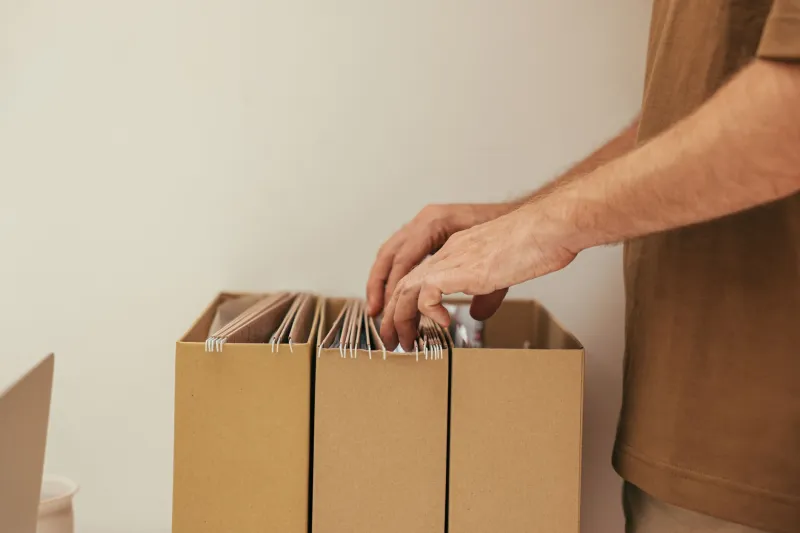
Check everywhere physical. Notebooks, sticky notes, old printed emails, the notes app on a phone you traded in. Tell a trusted family member what you're looking for — sometimes someone else remembers where you put something.
Don't pay upfront for "guaranteed" recovery. That's a scam. Full stop.
And if you find it? Please, for the love of all things digital, set up a proper hardware wallet, write your seed phrase on something fireproof, and store it somewhere you'll actually remember.
The Bonk Bottom Line
The wallet archaeology problem is one of crypto's most human stories — a collision of optimism, poor planning, the passage of time, and the genuinely surreal possibility that your old self left you a fortune you can't quite reach. Some people find it. A lot of people don't. Everyone has a story.
Somewhere right now, someone is driving to a storage unit in the rain, convinced that this is the day they finally find that notebook. We're rooting for them. We're also rooting for you to go check your old Gmail drafts folder right now, just in case.
You're welcome.


