Carbon Dating Your Crypto: A Blockchain Time Traveler's Guide to Actually Knowing What You Own

Somewhere between your third Discord alpha call and your fourth consecutive sleepless night in 2021, you bought something. You don't remember what. You don't remember when. You definitely don't remember why. But it's sitting there in a wallet you haven't touched in fourteen months, quietly existing, possibly worth something, possibly worth nothing, almost certainly giving your accountant a stress rash.
Welcome to the wallet archaeology problem — and more specifically, the timeline problem. Because knowing that you own a token is only half the battle. Knowing when you acquired it? That's where taxes get filed correctly, portfolio strategies get built on something other than vibes, and you stop confusing "I've held this since the beginning" with "I bought this during a 3 AM panic in November."
Let's dig.
Why Timestamps Are the Most Underrated Data Point in Your Portfolio
Here's a truth that crypto culture doesn't love to advertise: acquisition date is everything. Not just for IRS purposes — though yes, the difference between a short-term and long-term capital gain can be the difference between a manageable tax bill and a financial horror story — but for your own sanity as an investor.
When you know when you entered a position, you can answer questions like: Did I buy this before or after the hype cycle peaked? Am I actually an early adopter, or did I FOMO in at the top and just refuse to look at the chart since? Have I been "holding for the long term" or just avoiding a painful truth for eighteen months?
These are uncomfortable questions. The blockchain has the answers. The blockchain does not care about your feelings.
Your First Tool: Block Explorers Are Free and Brutally Honest
Etherscan, Solscan, BscScan, Polygonscan — these are your time machines. Every transaction on a public blockchain is permanently timestamped to the second, linked to a specific block, and completely searchable. Paste your wallet address into the relevant explorer and you'll see every single move you've ever made on that chain, in chronological order, with dates attached.
This is simultaneously empowering and deeply humbling. You'll find purchases you made at prices that now seem either genius or catastrophic. You'll find tokens you genuinely forgot existed. You'll find the exact timestamp of that "I'm just going to buy a little" moment that turned into a significant portion of your net worth being allocated to something called GigaFlokiMoon.
The timestamp on the first transaction involving a token is your acquisition date. Write it down. Seriously, open a spreadsheet. Your future self — and your CPA — will build a shrine to you.
Contract Deployment Dates: Separating Real OGs From Confused Latecomers
Here's a move that separates the genuinely curious from the casually chaotic: look up the contract deployment date for every token you hold.
Every ERC-20, SPL token, or BEP-20 contract was deployed to the blockchain at a specific moment. That deployment transaction is public. On Etherscan, pull up any token's contract address, click on the contract creator transaction, and you'll see exactly when this project came into existence.
Now compare that date to your acquisition date. If the token launched in January and you bought in January, you're an early holder — congratulations, that's a real thing. If the token launched in January and you bought in October when it was already plastered across every Telegram group in existence, you're a latecomer who got marketed to, and that's also fine, but you should know the difference.
This matters for portfolio analysis. Early positions in projects that survived have a different risk profile than late entries into hype cycles. Knowing which is which helps you understand your own track record as an investor — including the parts of that track record you'd prefer to forget.
Building Your Chronological Map
Here's a practical framework for constructing what we at BestCoinBonk affectionately call your Crypto Timeline of Regrets and Occasional Genius:
Step one: List every wallet address you've ever used. Yes, all of them. The hardware wallet, the MetaMask with three accounts, the one you set up specifically for "that one airdrop."
Step two: Run each address through the relevant block explorer for each chain. Ethereum, Solana, BSC, Polygon, Arbitrum, Avalanche — wherever you've been active, check it.
Step three: For each unique token you find, record the date of your first incoming transaction involving that token. That's your acquisition date.
Step four: Pull the contract deployment date for anything you don't immediately recognize. If the contract is six days old and you're somehow already holding it, you have questions to answer about your impulse control.
Step five: Sort everything chronologically. What you'll get is a timeline of your actual investment behavior — not the version you tell people at parties, but the real one.
The Tax Angle Nobody Wants to Talk About
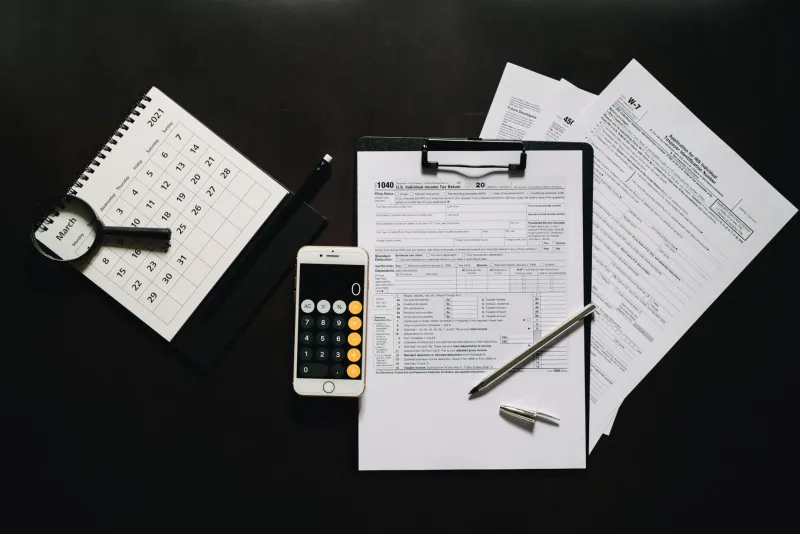
In the United States, the IRS treats crypto as property. That means every sale, swap, or taxable event generates either a short-term or long-term capital gain or loss, depending on how long you held the asset. Hold for under a year, you're taxed at ordinary income rates. Hold for over a year, you qualify for the lower long-term capital gains rate.
The difference can be dramatic. On a significant gain, we're talking potentially 20+ percentage points of difference in your tax rate. That's real money. And it all hinges on accurately knowing your acquisition date — something that's impossible to determine if you've never built your timeline.
Blockchain timestamps are legally defensible records. They're not estimates or approximations. They are the most accurate acquisition documentation you will ever have, and they're completely free to access. Using them isn't optional if you're filing honestly; it's the only way to do it correctly.
What Your Timeline Tells You About Yourself
Beyond taxes and portfolio strategy, your crypto timeline is a historical document of your decision-making under uncertainty. It shows you when you acted on conviction versus panic. It shows you which market conditions triggered your worst impulses. It shows you whether you actually have a strategy or whether you've just been reacting to group chats for three years.
That information is genuinely valuable. Not in a self-help way, but in a "I can make better decisions going forward if I understand my own patterns" way. The blockchain remembers everything you did. The question is whether you're willing to look.
So open that explorer. Build that spreadsheet. Date your holdings like a geologist dating rock strata — methodically, without sentiment, and with full acceptance that some of what you find is going to be embarrassing.
The coins don't judge. The timestamps just tell the truth.